
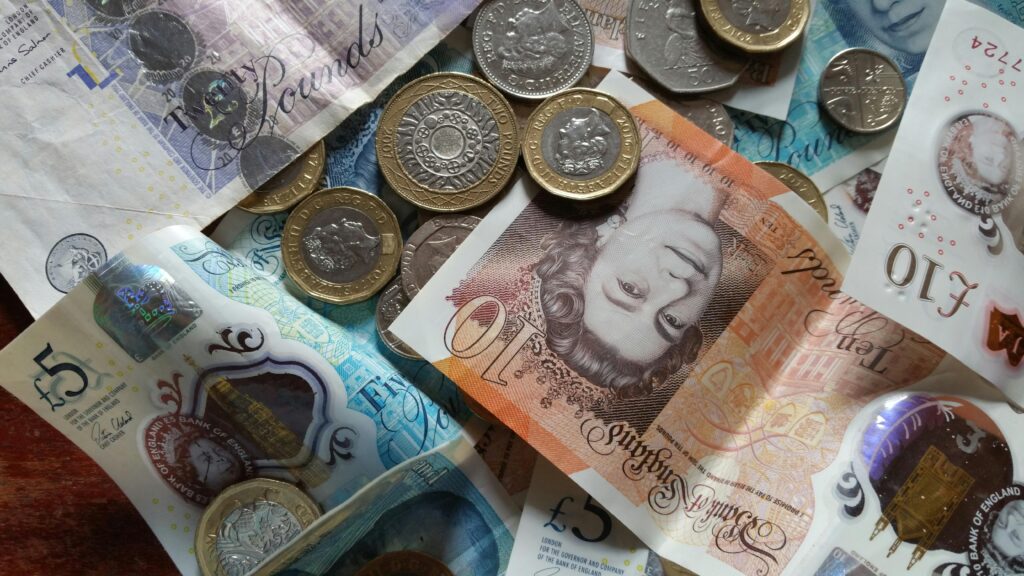
Money is perhaps the most bizarre invention of human beings. We find it everywhere making it, spending it, worrying about it, with goals of acquiring it. And yet if we sit back and reflect on ourselves, what exactly is money? —the answer too readily melts away into abstraction. Is it the tokens in our wallets, the figures on our monitors, the promise of the state to back its currency, or something less tangible: a communal belief that sustains economic existence?
Both economists and philosophers comprehend that money is not simply a “thing,” but a relationship, a system of trust, and above all an idea. If we are to understand its place in human life, we do not just need to look superficially at its history but also dig deeper into its meaning in philosophy.
Essentially, money has three distinct but interconnected functions: it is a medium of exchange, a unit of account, and a store of value.
- Medium of Exchange – Money avoids inefficiencies of barter. In a barter system, exchange involves a “double coincidence of wants”: one must have exactly what the other is looking for. A fisherman with ‘x’ fish may not happen to know a baker who requires fish and has x bread. Money avoids this restriction. The fisherman can sell fish for money and spend the money on bread, shoes, or anything else.
- Unit of Account – Money provides a universal vocabulary of value. Instead of needing to remember millions of exchange ratios (one goat is worth how many bushels of wheat?), money allows goods and services to be priced in one scale. Economic calculation, contracts, and planning are infinitely simplified.
- Store of Value – Money allows wealth to be carried into the future. A farmer will be able to sell grain today and hold the proceeds for the next season without the threat of spoilage or loss. Money converts productive effort into usable form, which can be consummated sometime in the future, hence allowing saving, investing, and long-term planning.
These three roles explain why money is unavoidable. But what is peculiar about money is that, while the things it purchases are functional in and of themselves, money itself is not. Bread nourishes, a coat warms, and a tool builds. A banknote obtains strength only because we all agree to accept it.

Trust and Abstraction
This reliance on trust reveals money’s philosophical oddity. Physical goods have value due to what they contain. A copper or nickel disc is more valuable than it is heavy. A paper bill cannot clothe us or nourish us. Even electronic scales possess no physical nature whatsoever. Their power is purely based upon the mass agreement that other people will accept them as being of worth.

It is for this reason that philosophers like to describe money as a social contract or collective fiction. John Searle, for example, calls it an “institutional fact”: it only exists because enough people collectively behave as though it did. Without belief, money does not work. With belief, it can get millions to coordinate their behaviour.
Money is but an ‘institutional fact
This abstraction is what makes money versatile and powerful. Because money represents not a particular good but value in general, it is exchangeable for just about anything. Economically speaking, it is “generalised purchasing power.” Philosophically speaking, it is an idea that brings together strangers, coordinating cooperation on scopes other arrangements cannot.
A Brief Historical Perspective
Even if our focus here is economic and philosophical, some history does help place in context how money has evolved through forms while its substance has remained abstraction and trust.
Early Accounting Systems (circa 3000 BCE): The first “money” was not coins but ledgers. In Mesopotamia, people noted debts and credits on clay tablets—whom to pay in grain, whom to pay in labor, when to repay at harvest time. Money began as a system of trust and accounting, not something tangible.
Commodities as Money: Over time, societies used commodities such as cattle, salt, or shells as money. They held intrinsic value but were awkward—cattle had to be fed, grain could spoil, and salt was heavy.
Coins (around 600 BCE): Ubiquitous coinage, discovered in Lydia (now Turkey), revolutionized trade. Coins made value transportable, divisible, and familiar everywhere, but most significantly, their legitimacy was not merely based on the metal but on the stamp of power that guaranteed their value.
Paper and Credit: Renaissance and medieval merchants increasingly employed written assurance and bookkeeping rather than pocketing coins. The development of banking firms such as the Medici formalized it, showing money could live in the form of notations in books—long before there were computers.
Fiat Currency: By the 20th century, money was completely divorced from gold and physical anchors. With the demise of the gold standard in the 1970s, money became strictly fiat: worth only because governments say it is and people believe it.
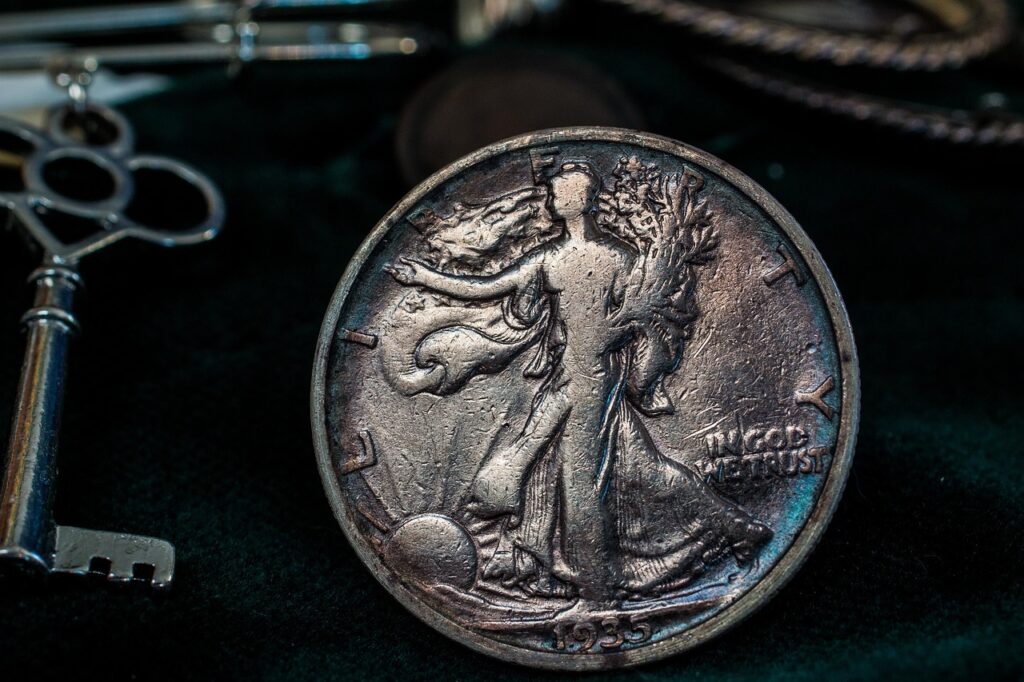
This path serves to illustrate a philosophical reality: money is not the physical tokens themselves but the network of trust, authority, and common belief they represent.
What is Asset Built on?
What is Asset Built on? What makes it unique in the fact that its creator needn’t touch a single line of code to deliver his very own website?
Built off Hostdinger Web Hosting
Now bringing to you for 20% off
What to create a brilliant site, with the latest, most popular tools such as wordpress inbuilt for free? Try Hostdinger for 20% off, as the most affordable prices on the market.
The Philosophy of Value
In an economic sense, money gives one a means of comparison and measurement. In a philosophical sense, the question becomes: what is being measured and how?
Economists like to define value in terms of utility—the satisfaction or usefulness that individuals get from goods and services. Money is therefore a mechanism for communicating relative desires in a society. Prices tell us, in a shorthand way, how much of one people are willing to give up in order to get another.
But value abstraction into money has its own issue. Does money reveal real worth, or does it distort it? Is value objective, like weight, or always subjective, constructed by circumstance and want?
Philosophers like Georg Simmel had thought of money as “the purest form of exchangeability.” As it eliminates specificity, it allows anything to be equated with anything else. It is that universality which makes cooperation in the economy possible but can also detach humans from the tangible specifics of value invested in labor, resources, and human needs.
Nietzsche, in a harsher tone, warned that money is a tool of power rather than of truth. It allows its owner to shape the world, to give commands to work, to alter conditions—not through any intrinsic value, but because others believe in the institution that makes money so powerful.
Money as Coordination
Economically, money is a coordination tool. It allows strangers’ societies to coordinate without trust among people. A shopkeeper does not accept a customer’s money because they believe or know the customer, but because they trust in the system overall.
This makes money one of the greatest tools of organization in all human history. Modern economies with their extensive systems of specialization would be unimaginable without it. Farmers can farm, engineers can engineer, and doctors can heal, all of them relying on money to link their different inputs.
But this universality is double-edged. Money does not discriminate motive or context—it simply coordinates. It will be employed to build schools or to wage wars, to invest in communities or to disinvest from them. It is oblivious to purpose, and that neutrality is both its power and its danger.
Money is more abstract than ever today. Wealth is largely not coins or paper but virtual records in bank computers. Funds are transferred by cards, apps, and quick transfers, with little or no physical token exchanged.
The appearance of cryptocurrencies propels this abstraction to an even greater level. Bitcoin, for example, is not backed by any state or commodity but mathematics and cryptography. It is an attempt to make trust depend not on institutions but on distributed technology. Whether or not such arrangements can sustain long-term belief is uncertain, but that they are so well-liked highlights a crucial fact: money is whatever the masses accept as money.

12 Month Personal
48 Month Personal
48 Month Business
- Free Domain alongside Hosting for one year
- Create up to 3 websites
- 20GB of storage
- WordPress intregration
- Weekly back-ups
- Migrate Your website for free
- Perfect for Hobbists
- Free Domain alongside Hosting for one year
- Create up to 3 websites
- 20GB of storage
- WordPress intregration
- Weekly back-ups
- Migrate Your website for free
- Perfect for Hobbists
- Free Domain alongside Hosting
- Create up to 50 websites
- 50 GB of storage
- Daily Back-ups of all your data
- WordPress intregration
- AI assistance for WordPress built-in, to create websites with AI
- 5 mailboxes per website
Conclusion
The question that has been coined throughout is, ‘what does it mean to have value’? We have placed it on multiple spectrums, including utility, demand, composition and elements of manufacture. However, I believe that each of these definitions are flawed and ultimately contradict each other. Let us take the example of trading cards. The cards themselves, practically worthless, costing mere pennies to manufacture, made of basic resources. The more expensive cards have little demand themselves because their prices are not worth their utility – it’s their rarity and the marketing of the distributor that drives up their value. Here, the only plausible definition of value is indeed the social status and recognition that the distributor has built around them, further underlining wealth as a social tool. To prevent us going down an inescapable rabbit hole, let us discuss the nature of this topic another time. To conclude, money and ultimately ‘value’s’ paradoxical nature stems from the fact that it is not a physical aspect of the world – it is a consequence of human perception and therefore biology. Money is a tool, a goal for all, yet fear of losing it makes it a stress. It’s value and therefore the upholding of a society relies on if mutual trust. Next time, we see what happens when money losses its value and the measures are taken to prevent this, looking at the global flow of money through trade as well as developing on the ethics of earning money.