Author name: ayaansinghal11@gmail.com

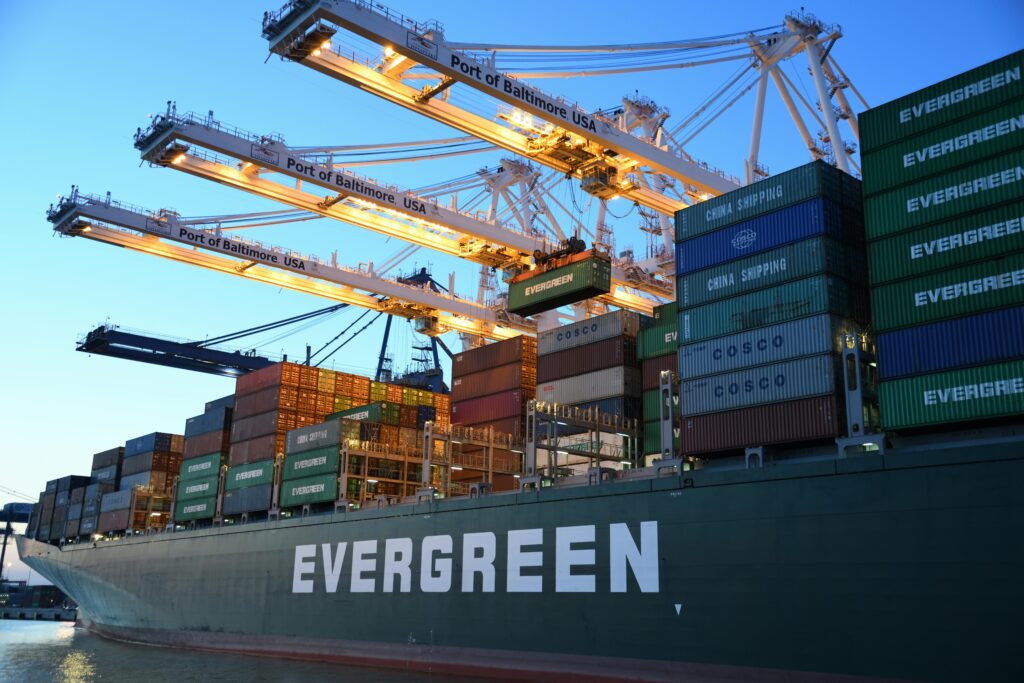
An Evergreen container ship loading at the Port of Baltimore during daytime.
Money through Countries

The Machinery Behind Global Trade

Once goods are produced, trade becomes about movement, coordination, and security. Every traded item enters a system governed by contracts, insurance, shipping schedules, port authorities, customs agencies, and naval power. This machinery is mostly invisible to consumers, yet it decides which nations gain leverage and which remain dependent.  The modern trade system depends on predictability. Manufacturers commit to production schedules months or years ahead, retailers plan inventory around shipping times, and financial markets price risk based on the reliability of supply chains. Any disruption from war, piracy, sanctions, labour strikes, or natural disasters causes ripples. Trade is not just economic exchange; it is managed stability, enforced through infrastructure and power – a great instability we have discussed before.  Shipping companies, port operators, insurers, and logistics firms form a quiet but crucial layer of global influence. A nation may not produce much itself but can have great trade power if it controls key parts of this system. Here, geography and maritime strength become critical.  The Strategic Geography of Trade Routes  Trade does not flow evenly across the globe. It moves through narrow corridors: straits, canals, chokepoints, and coastal hubs. These places have disproportionate importance because they concentrate global movement into controllable areas. The Strait of Hormuz, the Suez Canal, the Panama Canal, and the Malacca Strait are not just water passages; they are strategic levers, as history has shown time and time again. Control over these routes does not always mean ownership. It can mean a naval presence, political influence over neighbouring states, or economic leverage through port investment and debt. When trade routes are secure, commerce thrives. When they are threatened, markets panic, prices spike, and governments step in. This shows why maritime security is a central concern for major powers. This was seen particularly in the Suez Canal, as political tensions between middle eastern countries and western powers lead to a brief military takeover of the red sea, which proved a major strike on European trade, who rely on the canal for transport to Asia.  Historically, empires that dominated trade routes also dominated global politics. From the Athenian navy to the British Royal Navy, naval power allowed states to project influence far beyond their borders. Sea strength enabled nations to protect their merchants, disrupt rivals, and enforce trade rules on their terms. Even today, freedom of navigation reflects who can guarantee it.  Ports as Instruments of Power  Ports are the physical centres of trade power. They are not just loading zones but complex systems that integrate rail, road, storage, customs, finance, and security. A modern port is a city within a city, generating jobs, technological growth, and political influence.  Countries that invest heavily in port infrastructure often do so with strategic goals in mind. Deep-water ports that can handle the largest container ships become vital as shipping consolidates into fewer, larger vessels. Automation, digital tracking, and logistics integration improve efficiency but also centralize control. Whoever manages these ports gains insight into trade flows and influence over who can access them. This particularly happens along the African cost – countries such as China step in and offer to construct port infrastructure for these coastal countries – on the premise that, say, China would control the port for a set period. Port ownership has also become a geopolitical issue. Investments in foreign ports—often labelled as development aid or infrastructure financing—can lead to long-term influence. Control over port operations can mean influence over tariffs, access, and even military logistics. In this way, ports become tools of statecraft, not just commerce.  Some nations benefit more by positioning themselves as hubs rather than producers. Singapore thrives not because of natural resources but due to its unmatched port efficiency and strategic location. The Netherlands, through Rotterdam, serves as a gateway to Europe. These countries extract value from trade itself, not just from their exports. This was one of the major strengths of the British Empire – as well as producing many demanded crops such as sugarcane to sell, Britain became a key stop-over point for external merchants trading with Europe and the Americas.  Who Benefits Most from Trade  While trade increases global wealth, its benefits are not evenly shared. Countries that gain the most from trade tend to have several common traits: strong institutions, control over logistics, advanced manufacturing or high-value services, and naval or diplomatic power to protect trade interests.  Developed maritime nations often sit at the top of this hierarchy. They export complex goods and services, capture value through finance and insurance, and control shipping lanes. Their economies are diversified, allowing them to absorb shocks. When trade expands, they grow; when it contracts, they adjust. Export-oriented industrial states also benefit significantly, especially those that pair low production costs with state coordination. These nations use trade to build capital, technology, and geopolitical influence. However, their success heavily relies on continued access to foreign markets and secure shipping routes. In contrast, resource-dependent countries often reap the least relative benefit. While they may earn revenue from exports, they are vulnerable to price fluctuations and external control of transportation and processing. Without control over shipping, refining, or ports, much of the value generated by trade escapes their reach.  Thus, the biggest winners of trade are not necessarily those who produce the most, but those who control movement, standards, finance, and access. Trade favours coordination and power more than sheer output.  Sea Control and Political Authority  The connection between sea power and political authority remains strong. Naval presence protects trade but also signals dominance. Countries with global naval reach can impose sanctions, protect allies, and shape trade rules far from their shores.  Trade sanctions are a form of weaponized trade control. They rely not only on legal authority but also on physical enforcement—monitoring ships, controlling insurance, and restricting port access. Without control of maritime systems, sanctions lose their effectiveness.  This dynamic reinforces the truth that control of the seas underpins political order. Nations that depend on others for maritime security face limitations in their political choices. They may trade freely, but only within the boundaries set by those who secure the routes. Even international trade law reflects this truth. Rules are negotiated in forums where power imbalances matter. Enforcement depends on the willingness and ability of powerful states to uphold outcomes. Trade is not a neutral exchange; it is a

Grayscale image of a pirate ship docked in a peaceful harbor setting.
Money through Countries

An introduction to trade – its meaning, history and implications.

Trade is one of the most basic activities in human history. Long before modern states, currencies, or corporations were created, people exchanged goods and services to fulfil their needs. At its heart, trade involves buying and selling goods and services between individuals, businesses, or countries. Though it seems straightforward, trade has evolved into a very complex system that connects nearly every part of the world. It shapes economies, influences political relationships, drives technological growth, and impacts everyday life. Understanding trade is essential for grasping how the modern world operates.  The Basic Concept of Trade  Trade exists due to the uneven distribution of resources. Different regions have varying climates, natural resources, skills, and technologies. Some areas have rich fertile land, while others have minerals, oil, or skilled labour. Trade enables regions to focus on what they can produce most effectively and exchange their surplus for goods they do not have. This concept applies at all levels, from individuals trading time for wages to nations exporting manufactured products in return for raw materials.   Trade can take many forms. Domestic trade happens within a country, like when farmers sell their produce in urban markets. International trade occurs across national borders and involves exports (goods sold to other countries) and imports (goods bought from other countries). Domestic trade is usually simpler because of shared laws and currencies, while international trade is more complex and includes exchange rates, tariffs, trade agreements, and customs regulations.  Historical Development of Trade  Trade has been a part of human societies since ancient times. Initially, barter systems were common, where goods were exchanged directly without money. For instance, grain could be traded for livestock or tools. However, barter was inefficient as both parties had to want what the other had to offer. The invention of money solved this problem and greatly expanded trade. Ancient civilizations in Mesopotamia, Egypt, India, and China established extensive trade networks, such as the silk roads. The Silk Road connected East Asia with Europe, allowing silk, spices, metals, ideas, and technologies to flow between regions. Similarly, maritime trade thrived in the Mediterranean, Indian Ocean, and later the Atlantic. Trade was not just economic; it also spread religions, languages, scientific knowledge, and cultural practices.  During the Age of Exploration from the 15th to the 18th centuries, European powers dramatically expanded global trade. Colonies were established primarily to control trade routes and resources. While this period increased global exchange, it also led to exploitation, slavery, and unequal economic relationships that continue to shape global trade patterns today. The Industrial Revolution marked another key moment. Mechanized production increased output, lowered costs, and created a strong demand for raw materials and new markets. Trade volumes grew quickly, and modern financial systems, shipping methods, and trade institutions began to take shape.  Trade in the Modern Global Economy  Today, trade is deeply woven into the global economy. Most products consumed now contain components or resources from various countries. A smartphone, for instance, may be designed in one country, assembled in another, and have materials sourced from several continents. This interconnected system is commonly referred to as globalization – which is and has been the centre of the modern world.  International trade today operates under rules and organizations. Entities like the World Trade Organization (WTO) aim to promote fair trade, reduce trade barriers, and resolve disputes. Trade agreements, including free trade agreements and regional trade blocs, establish the terms for how countries trade with one another. These agreements often reduce tariffs (taxes on imports), set standards, and protect intellectual property.  Improvements in transportation and communication have made trade faster and less expensive. Container shipping, air freight, and digital logistics systems allow goods to move efficiently over long distances. Additionally, digital trade has emerged, where services, software, and data are traded online without physical shipment, as will be discussed in a later article.  Comparative Advantage and Specialization  One crucial principle that explains the benefits of trade is comparative advantage. This concept suggests that countries should focus on producing goods they can make at a lower opportunity cost than others, even if they aren’t the most efficient in absolute terms. By specializing and trading, everyone can benefit. For example, one country might be better suited for agriculture due to its climate and land, while another excels in manufacturing thanks to its skilled labour and technology. If each focuses on its strengths and trades, both can enjoy more goods than if they tried to produce everything on their own. This principle helps illustrate why trade can enhance overall economic efficiency and living standards.  Specialization also promotes innovation. When producers concentrate on specific industries, they gain experience, improve techniques, and invest in better technology. Over time, this can lead to higher productivity and economic growth.  Benefits of Trade  Trade provides numerous benefits at both national and individual levels. One significant advantage is access to a wider variety of goods and services. Consumers can enjoy products that are not made domestically, often at lower prices. This enhances quality of life and consumer choice. Trade also supports economic growth. Export industries create jobs, generate income, and attract investment. Countries that actively participate in international trade often experience faster growth due to increased production and efficiency. For developing countries, trade can be a path to industrialization and poverty reduction when managed properly. Another benefit is the transfer of knowledge and technology. Through trade, countries gain exposure to new technologies, business practices, and ideas. This can boost productivity and help industries modernize. Trade also encourages competition, prompting companies to innovate and improve quality to stay competitive.  On a global scale, trade can foster cooperation and interdependence among countries. When economies are linked through trade, they often have stronger reasons to maintain peaceful relations, as conflict can disrupt valuable economic connections.  Challenges and Criticisms of Trade  Despite its benefits, trade also brings significant challenges. One major concern is the unequal distribution of gains. While trade can increase overall wealth, not everyone benefits equally. Some industries may struggle due to foreign competition, leading to job losses and economic difficulties in certain areas. Workers lacking the necessary skills for growing industries may find it hard to adjust. Another issue is trade imbalances, where a country imports much more than it exports, resulting in debt and currency pressures. Ongoing

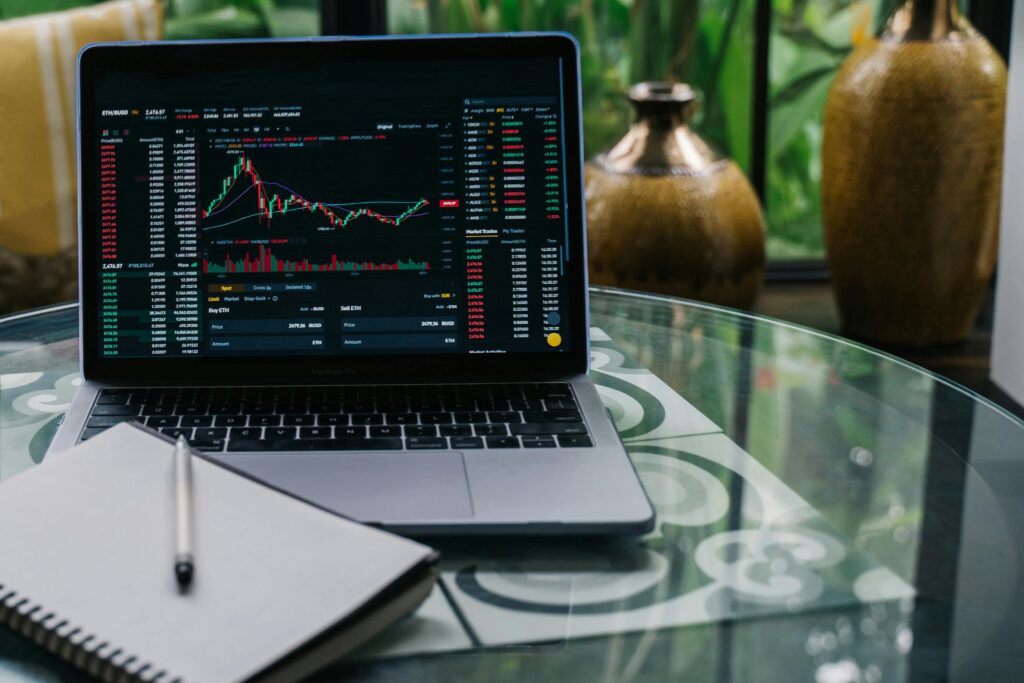
Laptop displaying cryptocurrency stocks and graphs on a glass table with a notepad.
Personal Wealth, Uncategorized

The theory of Investing – An introduction

Money seems ordinary because we use it daily, yet it is one of the most misunderstood forces in our lives. People often want to make more money without first asking a deeper question: where does money come from? The answer is not simply “work,” “banks,” or “markets.” Money comes from value—specifically, from the value that humans create, recognize, and agree upon over time. Understanding this is crucial for grasping investing, wealth, and how inflation quietly erodes what we already have.  At its core, money is a claim on human effort. Each unit of currency represents past work, problem-solving, coordination, or risk-taking. When you earn money, you are compensated for adding value to a system that others depend on. This is true whether that value arises from physical labour, intellectual effort, creativity, or organization. Money does not appear by magic; it is issued, exchanged, and trusted because societies agree that it represents real contributions.  However, once money is earned, a second issue arises: money does not naturally keep its value. Inflation ensures this. Over time, the same amount of money buys less. This is not an individual failure but a feature of modern economic systems. Inflation reflects population growth, changes in productivity, monetary policy, and shifts in demand. Philosophically, inflation symbolizes the idea that stored effort decays unless actively renewed. In simpler terms, money that sits idle slowly loses its meaning.  Yeah, yeah – where does investing come in? This leads us to the true purpose of investing. Investing is not primarily about getting rich quickly or outsmarting others. It is about preventing the value of your past efforts from fading over time. When people ask how to get more money, they often really want to know how to stop losing the value they have already earned. Investing serves as the link between present efforts and future significance.  To understand how people can get more money, we must recognize two main paths. The first is linear: exchanging time directly for money. This includes wages, salaries, and fees. While this approach is necessary, it has a natural limit. Time is finite, energy decreases, and opportunities are unevenly distributed. The second path is non-linear: putting money into systems that continue to create value without needing constant personal effort. This is where investing comes in.  When you invest, you are not just shifting money around. You are reallocating claims on future value creation. You are asserting, “I believe this system, organization, or idea will generate more value over time than the money currently represents.” This belief does not need to be technical to matter. At its essence, investing is a philosophical view toward the future: optimism balanced by realism.  Examples One of the most discussed personal investment options is stocks. Without getting into the mechanics, stocks represent partial ownership in companies—groups of people trying to solve problems, meet needs, or create efficiencies. When someone invests in stocks, they align their wealth with human productivity. If those companies grow and remain relevant, the investor’s claim on value also grows. This is why stocks are usually connected to long-term wealth preservation. They aim not only to increase money but also to keep wealth connected to ongoing economic activity instead of letting it stagnate.  Other investment options reflect similar philosophical ideas. Bonds, for instance, show trust in stability and continuity. They favor predictability over growth. Real assets often express belief in physical scarcity and lasting usefulness. Even simpler approaches, like investing in one’s own education or skills, follow this same idea: value must be placed where it can grow or resist decay.  Role of inflation Inflation makes this important. When money goes unused, its purchasing power declines. This decline is subtle but persistent. The danger is not a sudden loss but slow irrelevance. People often underestimate inflation because it does not feel like theft; it feels like time passing. Investing is a response to this reality. It tries to tie personal wealth to forces that move faster than inflation or at least alongside it. I really want to hammer home the importance of inflation here – investing reduces the effect of inflation, an action necessary to survive in today’s financial world. Importantly, investing does not eliminate risk. Instead, it swaps one type of risk for another. The risk of inflation is quiet and almost certain. The risks of investing are visible and uncertain. People tend to fear visible risks more than invisible ones, which is why many avoid investing even as inflation continually erodes their wealth. The investor consciously chooses uncertainty over certainty—not recklessly but purposefully.  This choice requires patience. Time is the most powerful element in investing, yet it is the hardest for people to respect. We crave immediate answers, immediate rewards, and immediate control. But value creation often does not work that way. Most meaningful systems—businesses, technologies, institutions—develop unevenly. Progress is often hard to see until it becomes undeniable. Investing aligns personal wealth with this reality. It asks individuals to tolerate uncertainty in exchange for long-term preservation and growth.  Is it truly worth it? Diversification, another commonly mentioned investing concept, shows humility rather than strategy. Philosophically, it admits that the future cannot be predicted accurately. By spreading investments across different areas, people accept uncertainty rather than ignore it. This acceptance is vital for sustainable wealth. Overconfidence destroys more wealth than ignorance ever could.  Investors also have different intentions. Some focus on growth, believing that innovation and change will outpace inflation. Others seek income and stability, preferring steady returns that keep purchasing power intact over dramatic growth. Some align their investments with ethical or social values, believing that money is not morally neutral. These approaches differ in form but share a common goal: keeping wealth meaningful in a changing world.  Conclusion Ultimately, investing is not just about numbers on a screen. It is about continuity. It ensures that yesterday’s effort still holds value tomorrow. Inflation threatens that continuity by quietly diminishing stored value. Investing responds by linking money to active systems—companies, infrastructure, innovation, and human collaboration.  The deeper lesson is that wealth is not static. It is a relationship between

Uncategorized

What Is Money? – From the economist and philosopher.

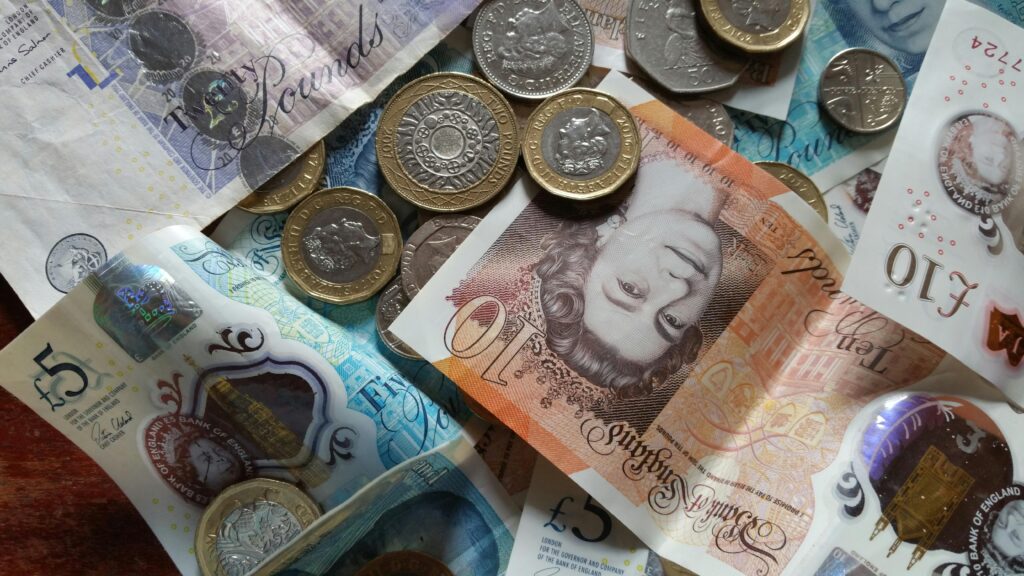
Money is perhaps the most bizarre invention of human beings. We find it everywhere making it, spending it, worrying about it, with goals of acquiring it. And yet if we sit back and reflect on ourselves, what exactly is money? —the answer too readily melts away into abstraction. Is it the tokens in our wallets, the figures on our monitors, the promise of the state to back its currency, or something less tangible: a communal belief that sustains economic existence?  Both economists and philosophers comprehend that money is not simply a “thing,” but a relationship, a system of trust, and above all an idea. If we are to understand its place in human life, we do not just need to look superficially at its history but also dig deeper into its meaning in philosophy.  Essentially, money has three distinct but interconnected functions: it is a medium of exchange, a unit of account, and a store of value.  These three roles explain why money is unavoidable. But what is peculiar about money is that, while the things it purchases are functional in and of themselves, money itself is not. Bread nourishes, a coat warms, and a tool builds. A banknote obtains strength only because we all agree to accept it.  Trust and Abstraction  This reliance on trust reveals money’s philosophical oddity. Physical goods have value due to what they contain. A copper or nickel disc is more valuable than it is heavy. A paper bill cannot clothe us or nourish us. Even electronic scales possess no physical nature whatsoever. Their power is purely based upon the mass agreement that other people will accept them as being of worth.  It is for this reason that philosophers like to describe money as a social contract or collective fiction. John Searle, for example, calls it an “institutional fact”: it only exists because enough people collectively behave as though it did. Without belief, money does not work. With belief, it can get millions to coordinate their behaviour.  Money is but an ‘institutional fact This abstraction is what makes money versatile and powerful. Because money represents not a particular good but value in general, it is exchangeable for just about anything. Economically speaking, it is “generalised purchasing power.” Philosophically speaking, it is an idea that brings together strangers, coordinating cooperation on scopes other arrangements cannot.  A Brief Historical Perspective  Even if our focus here is economic and philosophical, some history does help place in context how money has evolved through forms while its substance has remained abstraction and trust.  Early Accounting Systems (circa 3000 BCE): The first “money” was not coins but ledgers. In Mesopotamia, people noted debts and credits on clay tablets—whom to pay in grain, whom to pay in labor, when to repay at harvest time. Money began as a system of trust and accounting, not something tangible.  Commodities as Money: Over time, societies used commodities such as cattle, salt, or shells as money. They held intrinsic value but were awkward—cattle had to be fed, grain could spoil, and salt was heavy.  Coins (around 600 BCE): Ubiquitous coinage, discovered in Lydia (now Turkey), revolutionized trade. Coins made value transportable, divisible, and familiar everywhere, but most significantly, their legitimacy was not merely based on the metal but on the stamp of power that guaranteed their value.  Paper and Credit: Renaissance and medieval merchants increasingly employed written assurance and bookkeeping rather than pocketing coins. The development of banking firms such as the Medici formalized it, showing money could live in the form of notations in books—long before there were computers.  Fiat Currency: By the 20th century, money was completely divorced from gold and physical anchors. With the demise of the gold standard in the 1970s, money became strictly fiat: worth only because governments say it is and people believe it.  This path serves to illustrate a philosophical reality: money is not the physical tokens themselves but the network of trust, authority, and common belief they represent.  The Philosophy of Value  In an economic sense, money gives one a means of comparison and measurement. In a philosophical sense, the question becomes: what is being measured and how?   Economists like to define value in terms of utility—the satisfaction or usefulness that individuals get from goods and services. Money is therefore a mechanism for communicating relative desires in a society. Prices tell us, in a shorthand way, how much of one people are willing to give up in order to get another.   But value abstraction into money has its own issue. Does money reveal real worth, or does it distort it? Is value objective, like weight, or always subjective, constructed by circumstance and want?   Philosophers like Georg Simmel had thought of money as “the purest form of exchangeability.” As it eliminates specificity, it allows anything to be equated with anything else. It is that universality which makes cooperation in the economy possible but can also detach humans from the tangible specifics of value invested in labor, resources, and human needs.   Nietzsche, in a harsher tone, warned that money is a tool of power rather than of truth. It allows its owner to shape the world, to give commands to work, to alter conditions—not through any intrinsic value, but because others believe in the institution that makes money so powerful.   Money as Coordination  Economically, money is a coordination tool. It allows strangers’ societies to coordinate without trust among people. A shopkeeper does not accept a customer’s money because they believe or know the customer, but because they trust in the system overall.  This makes money one of the greatest tools of organization in all human history. Modern economies with their extensive systems of specialization would be unimaginable without it. Farmers can farm, engineers can engineer, and doctors can heal, all of them relying on money to link their different inputs.  But this universality is double-edged. Money does not discriminate motive or context—it simply coordinates. It will be employed to build schools or to wage wars, to invest in communities or to disinvest from them. It is oblivious to purpose, and that neutrality is both its power and its danger.  Money is more abstract than ever today. Wealth is largely not coins or paper but virtual records

Scroll to Top